
Kelin has focused on the production and sales of activated carbon for decades. We are familiar with the application and common sense of activated carbon.

In the beer and beverage industry, activated carbon is the last critical line of defense for maintaining the flavor of CO2. Its large surface area and selective adsorption capacity effectively capture and remove trace organic matter that causes off-flavors, ensuring the pure and odorless CO2 ultimately added to the product, thus protecting the consistency and high-quality flavor of the brand.
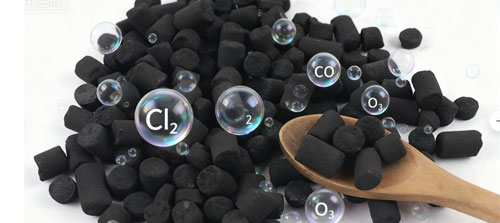
For industrial gas purification, there's no one-size-fits-all activated carbon. Pillared, honeycomb, and spherical activated carbons are the mainstream choices. Which one best suits your application depends primarily on the composition, concentration, and air volume of the gas being treated, as well as your purification process and objectives.
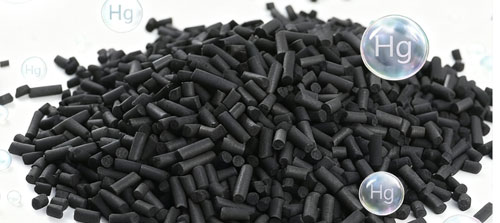
Mercury removal activated carbon is a type of activated carbon that has undergone a special chemical treatment. Chemicals such as sulfur, iodine, or chlorine (most commonly elemental sulfur or iodide) are loaded onto its surface. This allows it to react strongly with mercury vapor (Hg⁰) to form stable mercury compounds (such as mercury sulfide, HgS), effectively and selectively removing mercury from gas or liquid streams.

Potassium permanganate activated carbon is a composite purification material made by loading the strong oxidant potassium permanganate (KMnO₄) onto a high-surface-area carrier (such as activated carbon, alumina spheres, or zeolite) through a specialized process. Activated carbon is the most common carrier.

Under other similar conditions, the larger the specific surface area of activated carbon, the higher its dioxin adsorption capacity. However, the "effectiveness" of specific surface area is also strongly influenced by pore size distribution and surface chemistry.

Activated carbon can be determined to be saturated by observing bubbles, testing air quality, and comparing colors. Regular replacement and scientific regeneration are also essential.

Columnar activated carbon can be used directly to adsorb and recover low-concentration gaseous ammonia. However, for ammonia in ammonia solutions (especially aqueous solutions), the direct adsorption efficiency is very low and it usually needs to be chemically modified before it can be used efficiently.

The price increase of coconut shell activated carbon is the result of multiple factors, mainly involving raw material shortages, surging demand, rising costs and policy regulation. The following is an analysis of key driving factors:

The core of activated carbon's ability to be used for gold recovery lies in its unique physical structure and chemical properties, which enable it to efficiently and selectively "capture" gold from complex gold-containing solutions (such as cyanide leaching solutions). The following is a scientific analysis of the specific reasons:

Activated carbon used in gold recovery (usually coconut shell activated carbon or specially treated granular activated carbon) has a series of significant advantages, making it the core material for gold adsorption in cyanide leaching processes (such as carbon-in-pulp/CIP, carbon-in-leach/CIL):

The importance of packaging of activated carbon products is mainly reflected in the following aspects:

The reasons for the high price of gold recovery activated carbon are mainly related to its special performance, preparation process and industry demand, which include the following aspects:

 Get Free Sample
 WhatsApp