
Odour control is not one problem. Two odours that smell equally unpleasant can require completely different carbons, because the molecules responsible behave differently at the carbon surface. Non-polar, higher-molecular-weight odours — solvents, cooking and food odours, most volatile organic compounds — are held well by ordinary activated carbon through physical adsorption. Small, polar or reactive molecules such as ammonia, amines, hydrogen sulphide, mercaptans and formaldehyde are held poorly by it, and a standard grade that works perfectly on solvent vapour can pass them almost unchanged. That is the most common mistake in odour control: specifying carbon by iodine value or by price instead of by the gas being removed. Odour control spans food processing exhausts, waste transfer and composting halls, sewage pumping stations and industrial ductwork, and the odour species differ in every one of them.
Two mechanisms are available, and which one is needed depends on the molecule. Physical adsorption relies on weak dispersion forces and works best where the odour molecule is large, non-polar and present at moderate concentration. It is reversible, which is why carbon can be regenerated by heat. Chemical adsorption, or chemisorption, makes the carbon do chemistry: acid-impregnated grades neutralise alkaline odours such as ammonia and amines, while alkaline impregnation with sodium or potassium hydroxide and carbonates raises capacity for hydrogen sulphide and mercaptans. Published work on alkaline carbons has shown potassium hydroxide and sodium carbonate impregnation reducing hydrogen sulphide to concentrations below 30 ppm. Chemisorption is largely irreversible and consumes the impregnant as it works, so the media is used up rather than merely saturated.
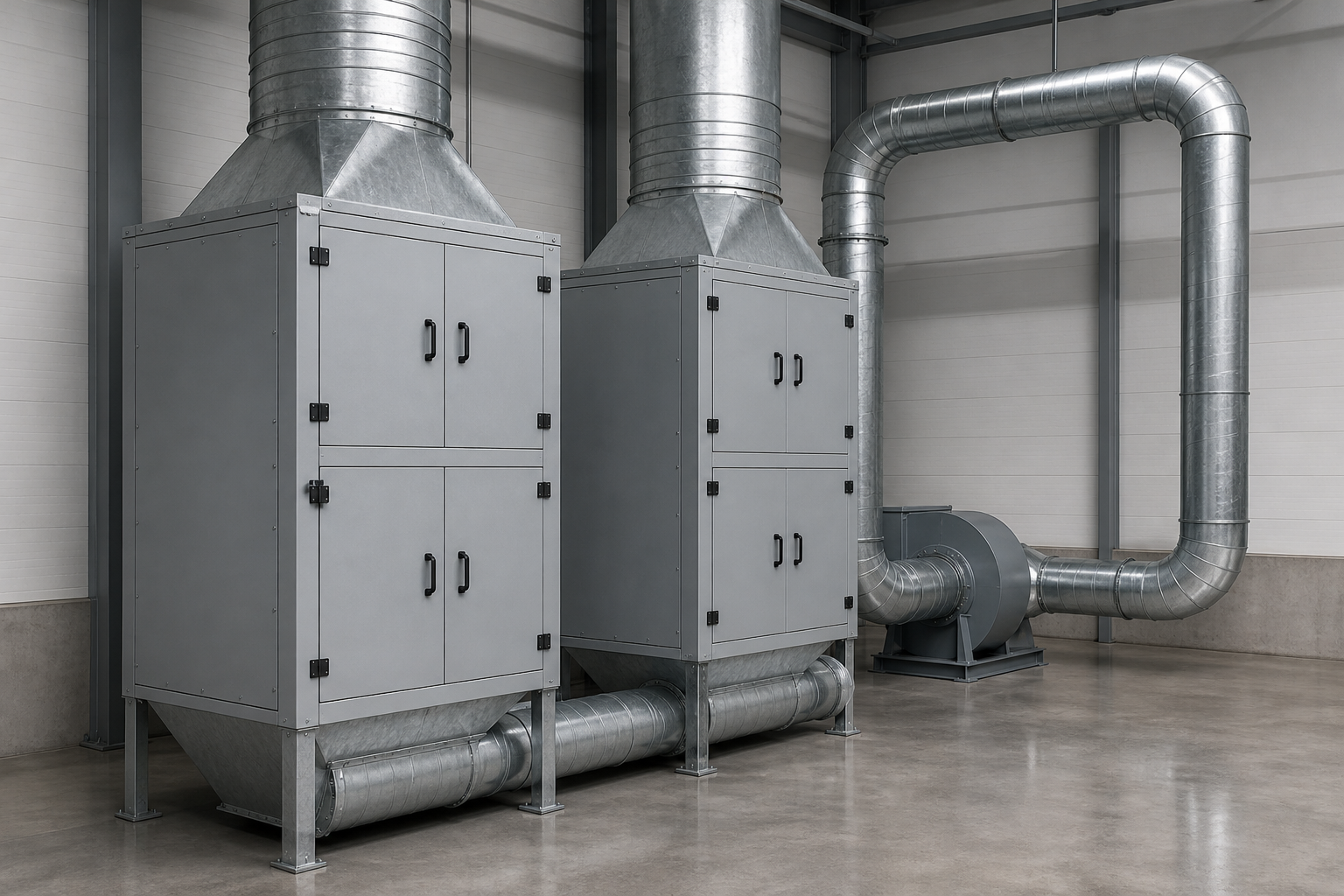
Humidity is the second variable, and it acts in opposite directions depending on the grade. Water vapour competes with organic molecules for the same pores, and the resulting loss of capacity grows with relative humidity and with the polarity of the odour molecule, so one grade can perform very differently in a dry duct and in a humid exhaust from a washing process. Some impregnated and catalytic grades behave the other way, because water participates in the reaction instead of competing for space. Temperature compounds the effect: adsorption is exothermic, so retention falls as the gas gets warmer, which is why odour control on a hot stack usually needs more media than the same load at ambient temperature. In practice a grade selected from dry-air data will over-promise on a humid exhaust, and a test run at the plant's real humidity is worth more than any datasheet figure.
Selection therefore starts with analysis rather than a catalogue. Identify the odour species and its concentration, then record the humidity and temperature of the actual stream, because those three values — not the carbon's headline surface area — determine the grade. Expect the life of a chemisorbing bed to be shorter and less predictable than that of a physical one: the impregnant is consumed as it reacts, and residual moisture and carbon dioxide in the air degrade it slowly even when the unit is idle. Replace on odour breakthrough rather than by calendar, and keep spent media away from strong oxidants. Where several odours occur together, a single impregnated grade is rarely sufficient, and a two-stage bed — a general grade followed by a targeted one — is the usual arrangement. A sample of the stream, taken before the carbon is installed, settles more of the specification than any comparison of datasheets.

 Get Free Sample
 WhatsApp