
High-iodine-value honeycomb activated carbon features an even larger specific surface area, a unique pore structure, stable surface chemical functional groups, resistance to acid and alkali corrosion, hydrophobicity, and—crucially—the capability for regeneration after becoming exhausted. Furthermore, thanks to its distinctive honeycomb architecture, it offers additional advantages such as high porosity, uniform gas distribution, an expanded geometric surface area, short diffusion pathways, abrasion resistance, and robust resistance to dust contamination.
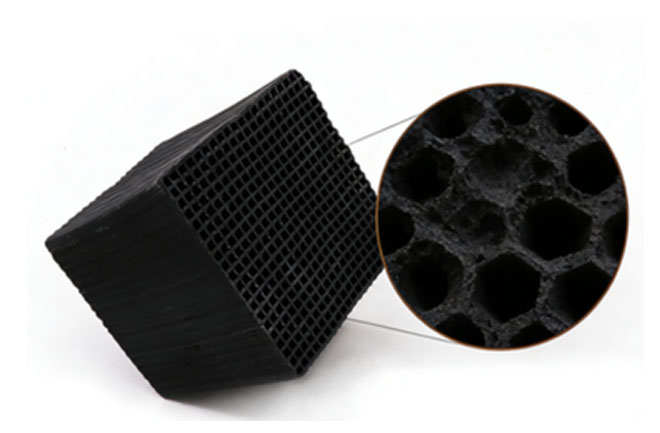
Compared to ordinary honeycomb activated carbon, high-iodine-value honeycomb activated carbon possesses a stronger instantaneous capture capability, resulting in superior adsorption efficacy for Volatile Organic Compounds (VOCs) and Total Non-Methane Hydrocarbons (TNMHC) across low, medium, and high concentration ranges.

Secondly, due to its higher content of active components and lower impurity levels, high-iodine-value honeycomb activated carbon boasts a longer service life, thereby reducing the frequency with which the activated carbon requires replacement. Once the activated carbon reaches adsorption saturation and becomes exhausted, it can be regenerated and recycled; this significantly reduces a company's hazardous waste disposal costs, thereby lowering overall operational and management expenses, while also aligning with sustainable development strategies.
 Get Free Sample
 WhatsApp