
1. Adsorption Performance is Key
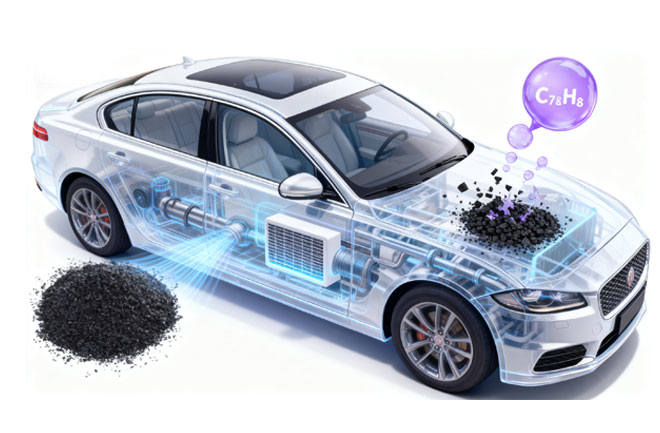
The interior of a car cabin is small, but contains a complex variety of pollutants, including exhaust fumes, formaldehyde, nitrogen oxides, sulfur dioxide, and odors. Therefore, activated carbon needs to have a broad-spectrum adsorption capacity. Some technical specifications mention the use of coconut shell-based activated carbon, due to its well-developed pore structure, which has a high adsorption rate (e.g., ≥91%-93%) for formaldehyde, benzene, and nitrogen oxides. Mann filters also mention that their treated activated carbon can effectively prevent harmful gases such as ozone and nitrogen oxides.

2. Low Air Resistance and Structural Compatibility
The activated carbon layer should not significantly affect the airflow of the air conditioner. Therefore, controlling the filter's air resistance is crucial. Philips filters claim to capture 99% of particles as small as 0.3 microns, which usually means that their filter material is both highly efficient and allows for good airflow. In actual products, activated carbon is typically integrated into multi-layer composite filter cartridges in the form of impregnation on non-woven fabric or a honeycomb structure.
3. Integration into Composite Filtration Systems A single activated carbon layer cannot meet all needs; it requires collaboration with other materials. Common "multi-layer composite structures" typically include:
Pre-filter layer: Intercepts larger particles, such as pollen and dust.
High-efficiency particulate filter layer (such as HEPA): Responsible for intercepting fine particles such as PM2.5.
Activated carbon layer: Centrally located, dedicated to gas adsorption.
Other functional layers: Such as antibacterial layers, etc.
 Get Free Sample
 WhatsApp